Which Type of Delivery Vehicle Does My Business Need?
October 28, 2026
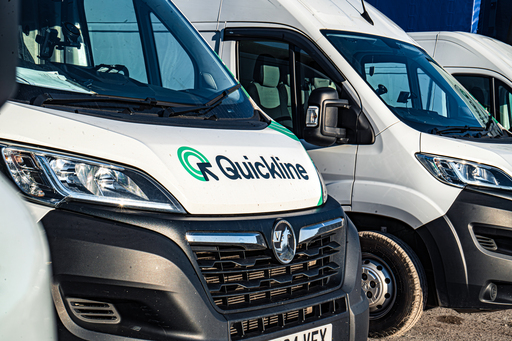
Quick answer: Choose a small van or short wheelbase (SWB) van for parcels and up to 2 pallets, a long wheelbase (LWB) or extra-long wheelbase (XLWB) van for 3 to 4 pallets and a Luton van with a tail lift for bulky goods up to 6 pallets. For 10 to 16 pallets, you need a rigid lorry of 7.5 to 26 tones and for full loads of 26 pallets, an articulated lorry.
Picking the wrong delivery vehicle costs money. Too small means extra trips, whereas too big means paying for space and fuel you don’t use. We run a fleet of ten vehicle types from depots in Leeds, Liverpool, Manchester, Preston, Stoke and Birmingham, and matching the right delivery vehicle to each load is what we do every day. This guide explains the main delivery vehicle types, what each one carries, and how to choose the right one for your business.
How do I choose the right delivery vehicle?
To choose the right delivery vehicle, start with the weight of your heaviest typical load and the number of pallets you move, then factor in access, distance and driver licensing. Payload weight, not cargo space, is usually what decides between van sizes.
Ask these five questions before you choose:
- What does your heaviest regular load weigh?
- How many pallets do you move? A UK standard pallet measures 1200 x 1000mm.
- Is the load bulky or awkward, and will you need a tail lift to unload it?
- Where are you delivering? Think city centers, Clean Air Zones, loading restrictions and narrow rural roads.
- How often and how far? Daily multi-drop routes suit different vehicles, from occasional long-distance runs.
Delivery vehicle types explained
The main delivery vehicle types are small vans, short wheelbase (SWB), long wheelbase (LWB) and extra-long wheelbase (XLWB) vans, Luton vans, rigid lorries from 7.5 to 26 tones, and articulated lorries. They range from a small van carrying 400kg on one pallet to an artic carrying 26,000kg on 26 pallets.
The table below shows typical load space and capacity for each vehicle in the Quickline Logistics fleet.
| Vehicle | Load space (L x W x H) | Payload | Pallets | Best for |
| Small van | 120 x 100 x 100cm | 400kg | 1 | Documents, parcels, urgent parts |
| SWB van | 240 x 100 x 120cm | 800kg | 2 | E-commerce, trades, city deliveries |
| LWB van | 340 x 120 x 180cm | 1,200kg | 3 | Everyday B2B deliveries |
| XLWB van | 420 x 120 x 180cm | 1,000kg | 4 | Long items, exhibition kit |
| Luton van | 400 x 200 x 200cm | 1,000kg | 6 | Furniture, white goods, events |
| 7.5 tonne | 600 x 240 x 220cm | 2,500kg | 10 | Retail and multi-pallet B2B |
| 12 tonne | 600 x 240 x 220cm | 5,000kg | 12 | Wholesale distribution |
| 18 tonne | 700 x 240 x 250cm | 9,000kg | 14 | Construction materials, bulk stock |
| 26 tonne | 800 x 240 x 250cm | 15,000kg | 16 | Heavy, high-volume loads |
| Articulated | 1360 x 250 x 260cm | 26,000kg | 26 | Full loads, haulage, European delivery |
Small vans and SWB vans
Small vans and SWB vans are the quickest, most manoeuvrable delivery vehicles. They are ideal for same-day delivery of parcels, documents and spare parts in towns.
LWB and XLWB vans
LWB vans are the all-rounder of the fleet, carrying up to 1,200kg and 3 pallets. XLWB vans add length for a fourth pallet or long items such as pipes and timber. Note that the extra body length can reduce payload, so check weight as well as space.
Luton vans
A Luton van holds up to 6 pallets with a payload of around 1,000kg and its box shape suits bulky, light goods. With a tail lift, it is the go-to choice for furniture, appliances and event equipment delivered to ground level.
Rigid lorries (7.5 to 26 tonnes)
Rigid lorries carry 10 to 16 pallets and suit regular multi-pallet deliveries to shops, warehouses and building sites. A 7.5 tonne lorry carries around 2,500kg, while a 26 tonne lorry carries up to 15,000kg.
Articulated lorries
An articulated lorry carries up to 26 pallets and 26,000kg, making it the most cost-effective option per pallet for full loads and long-distance haulage, including European delivery.
Box, curtain-sider or tail lift: Which do you need?
Choose a box body for security and weather protection, a curtain-sider for fast side loading by forklift and a tail lift when goods need lowering to ground level without loading equipment. Many Luton vans and lorries combine a box or curtain body with a tail lift for flexibility.
Electric delivery vehicles: are they right for your business?
Electric delivery vehicles are best suited to urban and multi-drop routes where daily mileage stays within the van’s real-world range, and charging is available at a depot or at home. For long-distance, heavy or highly variable routes, diesel vehicles are often still the more practical choice.
Types of electric delivery vehicles
Electric options now cover e-cargo bikes for last-mile city drops, small and medium electric vans, large electric panel vans, and a growing number of electric rigid lorries. Electric vans are the most established, with models available in most sizes up to 3.5 tonnes and beyond.
Range and payload
Most electric vans offer an official range of roughly 150 to 250 miles, but real-world range falls with heavy loads, motorway speeds and cold weather. Batteries also add weight, which can reduce payload. To help, UK rules allow category B license holders to drive alternatively fuelled vans up to 4,250kg.
Running costs and Clean Air Zones
Electric delivery vehicles typically cost less per mile to run than diesel, with lower energy and servicing costs, though the purchase price is higher. Government plug-in van grants have helped reduce that gap. Zero-emission vehicles also avoid Clean Air Zone charges, such as those for non-compliant vans in Birmingham and Bradford.
We are a member of Carbon Neutral Britain, so working with us lets you reduce the environmental impact of your deliveries without the costs of electric vehicles or chargers.
The best delivery vehicles for small businesses
For most small businesses, a short wheelbase (SWB) or long wheelbase (LWB) van is the best delivery vehicle, carrying 800 to 1,200kg and 2 to 3 pallets while staying easy to park and drive on a car license. Businesses moving bulky items like furniture or white goods are usually better served by a Luton van with a tail lift.
| If your business… | Choose |
| Sells online and ships parcels | Small van or SWB van |
| Delivers trade supplies or B2B orders | LWB van |
| Moves long items or exhibition stands | XLWB van |
| Delivers furniture or appliances | Luton van with tail lift |
| Supplies retailers with multiple pallets | 7.5 tonne lorry |
Frequently asked questions
How many pallets fit in a Luton van?
A Luton van holds up to 6 standard UK pallets with a payload of around 1,000kg. Most can be fitted with a tail lift for ground-level unloading.
What is the biggest van I can drive on a car licence?
A standard UK car licence (category B) covers vehicles up to 3,500kg, including Luton vans. Alternatively fuelled vans, including electric vans, up to 4,250kg can also be driven on a category B licence.
What is the range of an electric delivery van?
Most electric delivery vans have an official range of roughly 150 to 250 miles. Real-world range is lower when the van is fully loaded, driven at motorway speeds or used in cold weather.
What vehicle do I need for same-day delivery?
For most same-day deliveries, a small van or SWB van is the fastest and most cost-effective choice, carrying up to 800kg and 2 pallets. Larger loads may need an LWB van, Luton van, or 7.5 tone lorry.
Can Quickline Logistics be delivered to Europe?
Yes. We offer European delivery and freight forwarding, using vehicles up to articulated lorries for full loads.
Get the right vehicle for every delivery
Whatever you need to move, we have the delivery vehicle to match, from a small van for urgent parcels to an artic for full loads. View our full fleet or request a quote today for same-day, dedicated, pallet or European delivery.
Other News
Quickline Logistics Partners with North West Cancer Research
At Quickline Logistics, we believe being a successful business is about more than moving goods…
What Is the Difference Between Haulage and Freight Forwarding?
The terms haulage and freight forwarding are often confused in the transport industry, but they…

What Industries Rely Most on Haulage Companies?
Haulage is critical national infrastructure. Almost every product used, consumed, built, or sold in the…

Hello! Welcome to Quickline Logistics. How can I assist you today?